
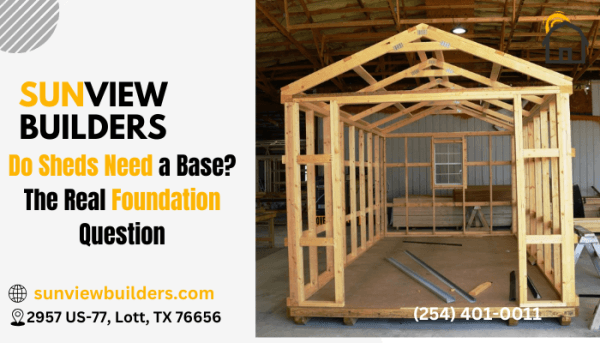
A shed might look simple from the outside, but the real strength of any structure starts from the shed base. The foundation decides whether your shed stays level for decades or slowly develops issues like sinking, tilting, and water damage.
For homeowners in Texas, this becomes even more important because the soil behaves differently across regions. Some areas have clay that expands and contracts, while others deal with loose or sandy ground. Add heavy rain, heat, and seasonal changes, and you quickly realize why a properly planned shed foundation is not optional.
At Sunview Builders, we design sheds that are not just built to look good but engineered to stay stable in real outdoor conditions. That starts with choosing the right base for your land and your shed type.
Why a Shed Foundation Matters
A shed foundation is more than just a flat surface. It is the structural support system that keeps your shed stable, level, and protected from environmental damage.
A well-built foundation helps maintain level flooring over time, prevents sinking or tilting caused by soil movement, reduces moisture exposure, improves airflow under the structure, and significantly increases the overall lifespan of the shed.
Without a proper base, even a high-quality shed can start developing problems such as uneven floors, stuck doors, water damage, and structural weakening.
What Happens If You Do Not Build a Proper Base
When a shed is placed directly on bare ground, several issues can appear quickly and get worse over time.
The most common problems include uneven settling due to soil shifting, water pooling underneath after rain, flooring damage caused by moisture absorption, structural stress that leads to misaligned doors and frames, and long-term decay of wooden parts.
In areas like Texas where clay soil expands when wet and contracts when dry, these issues can become even more severe if the shed is not properly supported.
Gravel Shed Foundation
A gravel foundation is one of the most widely used options for shed installation because it is simple, affordable, and highly effective for drainage.
It works well because it allows water to pass through easily, prevents water from collecting under the shed, and provides a stable surface when properly compacted. It also adapts better to slightly uneven ground compared to rigid surfaces.
This option is ideal for small to medium sheds and general backyard storage use.
Concrete Shed Foundation
A concrete slab foundation is the strongest and most durable option available. It is designed for long term performance and heavy load support.
This type of base is commonly used for workshops, large storage sheds, and garage style structures. It provides a perfectly level surface, handles heavy equipment easily, and performs very well in areas with unstable or shifting soil conditions.
In Texas, concrete slabs are often preferred for larger sheds because they reduce the impact of soil expansion and contraction.
Paver Shed Foundation
Pavers provide a structured and visually appealing foundation option. They are easier to install than a full concrete slab and still offer good strength when installed correctly.
This foundation type is suitable for medium weight sheds. It allows for proper drainage between gaps when installed on a prepared gravel base. It also offers flexibility since individual pavers can be replaced if needed.
Timber Frame Shed Foundation
A timber frame base lifts the shed slightly above the ground. This helps in areas where moisture is a concern or where the terrain is uneven.
It allows airflow underneath the shed which helps reduce dampness and wood rot. However, it does require maintenance over time to keep the structure in good condition.
Plastic Grid Shed Foundation
Plastic grid systems are a modern and eco-friendly solution for shed foundations. They are lightweight and designed to be filled with gravel for added strength.
They provide excellent drainage, are easy to install, and work well for DIY projects. They also help create a stable and uniform surface when properly leveled before installation.
Choosing the Right Foundation Based on Shed Size
Small sheds, usually up to 6×8 or 8×10, can be supported with gravel bases, pavers, or concrete blocks. These options are cost-effective and easy to install while still providing enough stability for light storage use.
Medium sheds that store heavier equipment require stronger support. Reinforced gravel bases or paver foundations are often used to ensure long term stability and prevent sinking under weight.
Large sheds and workshops need the strongest foundation possible. A full concrete slab is usually the best choice because it provides maximum durability and prevents shifting under heavy loads.
Importance of Soil and Weather Conditions in Texas
Texas soil plays a major role in shed stability. Clay-heavy soil expands when it absorbs water and contracts during dry periods. This movement can cause sheds to shift if the base is not properly prepared.
High temperatures and heavy rainfall also affect ground stability. Proper compaction, leveling, and drainage planning are essential to avoid long term structural issues.
Common Shed Foundation Mistakes
Many shed problems come from simple mistakes during installation. These include placing sheds directly on grass or soil, ignoring drainage direction, failing to compact the base material, not leveling the ground correctly, skipping anchoring systems, and choosing a foundation that is too weak for the shed size.
Avoiding these mistakes helps ensure long term performance and reduces repair costs.
Best Practices for a Strong and Durable Shed Base
A strong shed foundation starts with proper preparation. The ground should always be compacted before adding any base material. A slight slope should be included to help water drain away from the shed.
Anchoring the shed properly is also important, especially in areas with strong winds or shifting soil. In colder regions, deeper concrete slabs can help reduce movement caused by ground freezing and thawing.
Good drainage planning is equally important to prevent water from collecting around the shed base.
Build Your Shed the Right Way with Sunview Builders
A shed is a long term investment and the foundation determines how well it performs over time. Choosing the right base protects your structure from sinking, shifting, and moisture damage while ensuring long lasting durability.
At Sunview Builders, we design and install sheds built specifically for Texas conditions. We make sure every structure is properly supported from the ground up so you do not face problems later.
Call or message us today to discuss your shed project. You can also use our 3D Builder tool to design your custom shed and choose the right foundation before installation. Let our team help you build a strong, stable, and long lasting structure that is made to withstand Texas weather.