
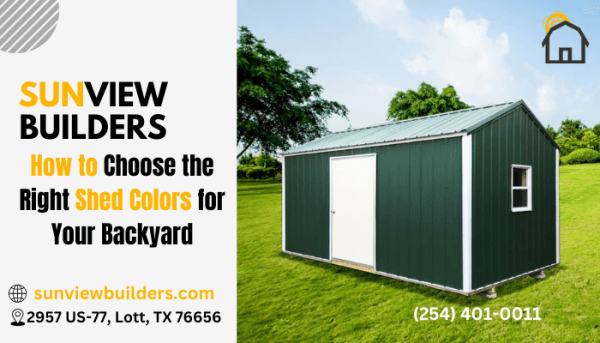
Most people choose a shed color the same way they choose paint for a wall. They look at a few samples, pick something that looks nice, and move on. But a shed is not a wall. It sits outside all year in changing light, weather, dust, heat, and landscaping growth. It becomes part of your backyard whether you plan it or not.
At Sunview Builders, shed color is treated as part of outdoor design, not decoration. The goal is not only to pick something attractive but to choose a shade that actually belongs in your backyard environment and supports the overall shed base, shed structure, and outdoor layout.
Table of Contents
ToggleYour Backyard Already Has a Color System
Before choosing shed color ideas, look at what already exists in your space.
Every backyard already has natural tones including soil, grass, plants, fences, stone paths, and your house exterior. These elements already form a visual system.
A shed is not starting from zero. It is entering an existing environment. When this is ignored, even a high quality shed can feel visually disconnected.
Good shed design always starts with the surroundings first, not color swatches.
The Idea of Blending the Shed Color Into the Backyard
One of the most effective approaches in shed color planning is blending.
This does not mean hiding the shed. It means choosing a color that allows the shed to sit naturally within the landscape.
This works especially well for storage sheds placed near gardens, fences, or corners of the yard. Soft gray, muted green, and natural brown tones are commonly used because they reduce visual noise and help the shed feel integrated.
In this approach, the shed supports the backyard instead of competing with it.
When a Shed Should Stand Out
Not every shed should disappear into the background. Sometimes the shed becomes part of the visual identity of the outdoor space.
If the shed is placed in an open lawn, near a patio, or used as a workspace, it can be designed as a feature element.
In these cases, contrast works better. A charcoal shed against green grass, a deep brown shed near light stone, or a clean white shed in a modern yard can create strong visual balance.
The key is intention. The shed should feel designed, not randomly placed.
Natural Shed Colors Age Better Over Time
One of the most important factors in shed color selection is how it will look after several years, not just on day one.
Outdoor environments change constantly. Sunlight fades surfaces. Dust collects. Plants grow and shift the background.
Natural tones like brown, gray, olive, and beige perform better in these conditions. They do not fight the environment. They adjust to it.
At Sunview Builders, these tones are often recommended because they remain stable and visually balanced over time.
Sunlight and Location Change Everything
The same shed color can look completely different depending on placement.
Full sunlight makes colors appear brighter and can speed up fading. Dark shades may feel stronger and more intense. Shaded areas make colors appear deeper and softer.
This is why shed color and shed base placement should always be planned together. A shed is not seen in controlled lighting. It is seen in real outdoor conditions all day long.
Should Your Shed Match Your House
Matching the shed to the house is common, but it is not required.
Exact matching creates a uniform and clean look. This works well for simple and modern homes where consistency is the goal.
However, coordination often works better than exact matching. Instead of copying the house color, you use related tones. A gray home may pair with a charcoal shed or a soft green shed. A beige home may work well with a warm brown shed.
There is also contrast design. A light house with a darker shed or a darker house with a lighter shed can create depth when done carefully.
The goal is not sameness. The goal is balance.
Fence, Deck, and Shed Should Work Together
A shed is part of a larger outdoor system that includes fences, decks, patios, and landscaping.
Wood fences and decks pair well with earthy shed colors like brown and gray. White fences often work with soft green or neutral gray sheds. Dark fences can support either contrast or matching tones depending on the design.
When these elements are coordinated, the entire backyard feels more complete and intentional.
Maintenance and Practical Color Choice
Shed color also affects long term maintenance.
Light colors show dirt, pollen, and stains more easily. Dark colors can show fading and dust over time. Mid tone colors usually offer the best balance because they are more forgiving in outdoor conditions.
Matte finishes also tend to hide imperfections better than glossy finishes.
This is why color selection is not only a design choice. It is also a maintenance decision.
Material Matters in Shed Color Performance
The material of the shed affects how color behaves over time.
Wood sheds allow painting and staining but require regular maintenance. Metal sheds need protective coatings. Modern resin and prefabricated sheds come with built in color finishes that are designed to resist fading, cracking, and peeling.
At Sunview Builders, many shed designs are built to reduce maintenance needs so the focus stays on choosing the right shed color ideas instead of repeated repainting.
Simple Way to Decide Shed Color
If the decision feels overwhelming, there is a simple approach.
Look at your backyard in different lighting conditions including morning, afternoon, and evening. Then ask one question.
Do you want the shed to blend into the landscape or become a visible feature of it.
If blending is the goal, choose natural tones. If visibility is the goal, choose contrast colors. If balance is the goal, stay in neutral mid tones.
This removes confusion and makes the decision more practical.
Final Thoughts
A shed is not just storage. It is part of your outdoor environment and shed base planning. The color you choose affects how the entire backyard feels over time.
The best shed color is not the most popular one. It is the one that fits your home, your landscape, and your long-term outdoor design.
At Sunview Builders, every shed is designed to belong in its environment. Color is not an afterthought. It is part of the structure itself. Choosing it carefully ensures your shed looks right today and still feels right years later.