
How to Build a Skid Foundation for a Cabin
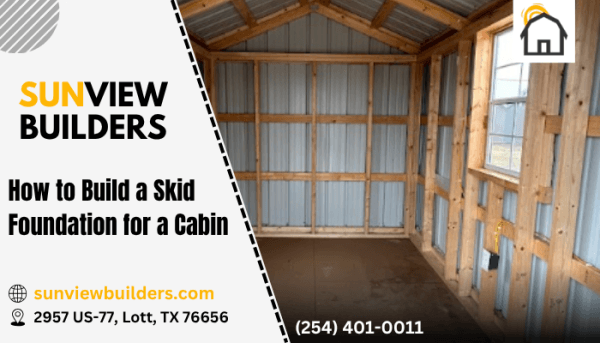
If you are planning a cabin project, the foundation is where everything starts. It decides how stable the structure will be, how long it lasts, and how much maintenance you will deal with later. One of the most practical systems for small structures is a skid foundation.
At Sunview Builders, we work with skid-based cabin and portable structure designs regularly, especially for clients who want simple construction without the cost and complexity of concrete foundations. This guide is based on real build experience, not theory. It will walk you through exactly how a skid foundation is planned and built.
What Is a Skid Foundation?
A skid foundation is a structural base made from long, heavy beams placed directly on the ground or on a prepared gravel bed. These beams are called skids, and the entire cabin is built on top of them.
Instead of anchoring a building into concrete, the structure sits on runners that distribute weight evenly.
This allows:
- Easier installation
- Lower cost construction
- Potential mobility in the future
We use this system for many portable cabins and shed-style builds, especially when clients want flexibility without sacrificing structural strength.
Where Skid Foundations Work Best
A skid foundation is not universal, but it is extremely effective in the right conditions.
It is commonly used for:
- Small cabins
- Portable cabins
- Storage buildings
- Hunting cabins
- Site offices
- Modular or movable structures
At Sunview Builders, we often recommend skid foundations for clients who want a fast-build, cost-controlled cabin solution without long construction timelines.
Advantages of a Skid Foundation
Before you start building, it helps to understand why this system is widely used.
1. Lower Construction Cost
No concrete slab is needed, which reduces both material and labor costs.
2. Faster Build Time
A skid base can often be installed within a short time frame when ground conditions are ready.
3. Flexibility
The structure can be adjusted or relocated in certain cases.
4. Easy Maintenance
The underside remains accessible for repairs or inspection.
5. Suitable for Remote Sites
Works well where concrete trucks or heavy equipment access is limited.
Sunview Builders frequently uses skid systems for rural and off-grid style projects where speed and simplicity matter.
Limitations You Should Know
A skid foundation also has clear limitations:
- Not suitable for large multi-story buildings
- Requires proper leveling and drainage
- Needs correct material selection to avoid decay
- Must follow local building requirements
This is where professional planning matters. At Sunview Builders, we help clients avoid common mistakes by designing skid layouts based on load, soil type, and cabin size before construction begins.
Step 1: Site Selection
The foundation is only as good as the ground underneath it.
You need:
- Stable soil
- Good drainage
- Minimal slope or easy grading access
- No standing water after rain
If the site is poorly chosen, even a well-built skid system will struggle over time.
Step 2: Planning the Skid Layout
This step defines how your entire cabin will sit.
Typical setups include:
- 2 to 4 parallel skids
- Even spacing under structural load points
For example:
- Small cabins (10×12 to 12×20): 2–3 skids
- Medium cabins (16×24 and above): 3–4 skids
We design skid layouts based on actual load calculations, not guesswork. This ensures the structure remains stable even under long-term use.
Step 3: Ground Preparation
This is one of the most important steps.
Process includes:
- Clearing vegetation and topsoil
- Leveling the ground
- Compacting the surface
- Adding gravel base (recommended 4–6 inches)
Gravel is essential. It improves drainage and prevents moisture buildup under the structure.
Without this step, even strong skids can deteriorate faster.
Step 4: Choosing Skid Material
Material selection directly affects durability.
Common options:
Pressure-treated wood
- Most common
- Cost-effective
- Ideal for small cabins
Heavy timber beams
- Higher load capacity
- Longer lifespan
Steel skids
- Maximum strength
- Higher cost
- Used for heavy or transportable units
We typically recommend pressure-treated 6×6 skids for most residential-style cabins unless the project requires a heavier solution.
Step 5: Setting and Leveling the Skids
This step determines structural accuracy.
Process:
- Place skids on gravel base
- Align spacing according to design
- Use laser level or string line
- Adjust height using gravel or shims
- Confirm level in all directions
Even small errors here can create long-term structural issues like uneven flooring or door misalignment.
This is one of the stages where professional builders like Sunview Builders add real value by ensuring precision from the start.
Step 6: Anchoring the Structure (Recommended)
Anchoring is often overlooked, but it improves long-term stability.
Methods include:
- Ground stakes
- Metal tie-down systems
- Concrete anchors
Anchoring prevents:
- Shifting during storms
- Slow movement on soft ground
- Structural misalignment
For long-term cabin use, Sunview Builders strongly recommends proper anchoring, especially in open or windy areas.
Step 7: Floor Framing
Once skids are set, floor construction begins.
Steps:
- Install rim joists
- Add floor joists across skids
- Maintain proper spacing (16” or 24” on center)
- Secure all connections tightly
This creates the main structural platform of the cabin.
Step 8: Installing Subfloor
Now the surface is formed.
Materials:
- Plywood (preferred)
- OSB panels (budget option)
Steps:
- Lay panels across joists
- Stagger joints
- Screw securely into framing
A strong subfloor ensures stability for all future construction.
Step 9: Moisture and Drainage Protection
This step protects long-term durability.
You should:
- Maintain gravel drainage slope
- Keep airflow under cabin
- Avoid water pooling under structure
- Add barriers if required
Moisture control is critical for wood-based skid systems.
Step 10: Final Inspection Before Building Upward
Before wall framing starts:
- Check level accuracy
- Confirm joist strength
- Inspect anchoring
- Verify drainage flow
Fixing issues now is simple. Fixing them after the walls go up is expensive.
Common Mistakes to Avoid
These are the most frequent issues seen in DIY builds:
- Skipping gravel base
- Using untreated wood
- Poor leveling work
- Weak fasteners
- Incorrect joist spacing
- Ignoring anchoring
At Sunview Builders, most repair consultations come from these avoidable mistakes.
When to Use a Skid Foundation
Use this system when:
- You need a small to mid-size cabin
- Budget efficiency is important
- You want faster construction
- The structure may need relocation later
For permanent multi-floor homes, concrete foundations are still the better choice.
How Sunview Builders Can Help
Building a skid foundation may look simple on paper, but execution is where most problems start.
At Sunview Builders, we help clients make the process easier by offering:
- Custom skid foundation planning based on cabin size
- Pre-built or modular cabin solutions
- Structural guidance for DIY builders
- Complete portable cabin and shed construction services
- Design support to avoid costly mistakes
Instead of guessing measurements or risking structural errors, you can have a properly engineered layout from the beginning. That saves time, material cost, and future repairs.
Whether you are planning a small cabin, portable building, or skid-mounted structure, our goal is to make the build process straightforward and reliable.
Final Thoughts
A skid foundation is one of the most efficient ways to support a small cabin when done correctly. It is simple, cost-effective, and adaptable. But it still requires proper planning, leveling, and material selection.
If the base is right, everything built above it becomes easier, stronger, and more stable.
We focus on getting that base right the first time so the rest of your project stays predictable and durable.