
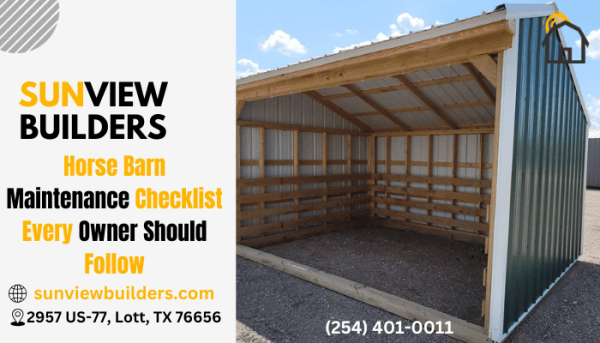
A horse barn in Texas does not live an easy life.
Between intense summer heat, sudden weather shifts, dust, humidity, and constant animal activity, even a well-built barn starts to wear down faster than most owners expect. The truth is simple. A horse barn is not a “set it and forget it” structure. It is a living workspace that needs routine care if you want it to stay safe, functional, and long-lasting.
This guide is not a generic checklist. It is a practical, Texas-specific horse barn maintenance system designed to help you protect your investment, improve horse safety, and avoid expensive repairs later.
Whether you own a small private stable or a larger equestrian setup, this is what real barn maintenance actually looks like.
Why Horse Barn Maintenance Matters More in Texas
Texas weather is not gentle on structures.
You are dealing with:
- Extreme heat that expands and stresses materials
- Sudden storms and heavy rainfall
- High dust levels that affect air quality
- Humidity that can lead to mold and wood damage
- Constant use from horses, equipment, and daily operations
Without regular maintenance, small issues become expensive problems very quickly. Loose boards, blocked drainage, poor ventilation, and worn flooring can affect not only your barn but also your horses’ health.
Good maintenance is not about appearance. It is about safety, durability, and daily functionality.
Daily Horse Barn Maintenance Checklist
These are small habits that prevent big problems.
1. Check water supply and feed areas
Make sure:
- Water troughs are clean and functioning
- No leaks or contamination
- Feed storage is sealed from pests and moisture
2. Quick stall inspection
Look for:
- Wet bedding buildup
- Sharp edges or broken boards
- Signs of chewing or damage
3. Walk-through safety check
Before finishing the day:
- Ensure gates close properly
- Remove loose tools or hazards
- Confirm horses are safely secured
Small daily checks reduce accident risks significantly.
Weekly Horse Barn Maintenance Tasks
This is where real upkeep begins.
1. Deep stall cleaning
Remove all bedding, scrub surfaces if needed, and ensure full drying before replacing material. Moisture buildup is one of the fastest ways to damage barn flooring.
2. Ventilation check
Texas heat demands strong airflow.
Check:
- Fans are working properly
- Vents are not blocked by dust or debris
- Airflow is consistent across stalls
Poor ventilation leads to heat stress and respiratory issues in horses.
3. Fence and gate inspection
Look for:
- Loose hinges
- Rust or corrosion
- Weak or unstable sections
Repair immediately instead of waiting for failure.
4. Pest control check
Inspect feed storage and corners for rodents or insects. Even small infestations can escalate quickly in barns.
Monthly Horse Barn Maintenance Checklist
This is where you protect long-term structure health.
1. Roof inspection
Check for:
- Leaks or water stains
- Loose panels or shingles
- Storm damage
Texas storms can cause damage that is not always visible immediately.
2. Drainage system review
Ensure:
- Water flows away from barn foundation
- No standing water near stalls
- Gutters and downspouts are clear
Poor drainage is one of the top causes of barn foundation damage.
3. Electrical system check
Inspect:
- Exposed wiring
- Flickering lights
- Overloaded outlets
Barn electrical systems are often exposed to dust and moisture, so safety checks are critical.
4. Structural integrity review
Look at:
- Support beams
- Wall alignment
- Signs of shifting or cracking
Early detection prevents expensive structural repairs.
Seasonal Maintenance for Texas Horse Barns
Texas seasons can shift dramatically, so preparation matters.
Before Summer
- Service all fans and ventilation systems
- Add heat-reducing shade options if needed
- Check hydration systems for efficiency
- Inspect insulation and roof heat resistance
Before Storm Season
- Secure loose exterior panels
- Reinforce gates and doors
- Clean drainage paths thoroughly
- Store loose equipment safely
Before Winter
- Check water freezing protection systems
- Seal gaps that allow drafts
- Inspect roofing after storm season
- Prepare bedding for colder temperatures
Common Horse Barn Maintenance Mistakes in Texas
Many barn owners unknowingly shorten their barn’s lifespan by skipping small details.
Avoid these mistakes:
- Ignoring small leaks until they spread
- Poor ventilation during hot months
- Overlooking drainage issues
- Delaying fence and gate repairs
- Using damp or low-quality bedding
- Not cleaning the feed storage regularly
Most major barn repairs start as minor, ignored issues.
How Maintenance Protects Your Investment
A well-maintained horse barn does more than look good.
It helps you:
- Reduce long-term repair costs
- Improve horse health and comfort
- Increase property value
- Extend barn lifespan by years
- Avoid sudden structural failures
Think of maintenance as protection for both your animals and your investment.
Final Thought: A Horse Barn Should Work With You, Not Against You
In Texas, a horse barn is constantly tested by weather, time, and daily use. The owners who stay ahead are not the ones with the newest barns, but the ones who maintain them properly.
Small checks today prevent major problems tomorrow.
Build Smarter, Maintain Easier with Sunview Builders
At Sunview Builders, we design horse barns that are built for real Texas conditions. That means smarter airflow systems, durable materials, better drainage planning, and layouts that make maintenance easier from day one.
A well-designed barn should not constantly fight maintenance problems. It should reduce them.
If you are planning a new horse barn or upgrading an existing one, we can help you design a structure that stays easier to maintain, safer for horses, and stronger over time.
Talk to Sunview Builders today and build a horse barn that stays reliable in every Texas season.